


Accelerating REUSE – Unlocking the PPWR’s Full Potential.
10th European REUSE Conference
6th November 2025. 9h30 - 16h00
At the 10th anniversary of the REUSE Conference, we celebrated almost two decades of progress: reuse is no longer a theoretical solution for the future — we make it happen now. The captivating speakers and discussions made one thing clear: the upcoming implementing acts must be ambitious and on time, and Member States need to implement the regulation quickly and decisively.
The REUSE Conference is organised every two years by Environmental Action Germany (Deutsche Umwelthilfe – DUH), the European Association of Beverage Wholesalers (CEGROBB), Private Breweries Germany, Pro Mehrweg e.V. and the Reloop Platform. Over 170 representatives from politics, civil society, business, academia, and public administration participated in the 2025 edition of the conference, held both at the University Foundation Brussels and online.
The Packaging and Packaging Waste Regulation (PPWR), in force since 11 February 2025, marked a milestone for the EU circular economy, introducing binding waste prevention targets and mandatory REUSE requirements for the first time. The 10th European REUSE Conference seized this opportunity to explore how to fully harness the PPWR, how its implementation can unlock opportunities across Member States, what is needed to build effective reuse systems throughout Europe, and how to secure the necessary financing to scale and sustain these systems.
Strong Impulses from the European Institutions
The keynote speeches underscored the crucial role that the implementation of the PPWR plays in shaping a truly circular packaging market in Europe and highlighted the need for continued dedicated action at both the European and national levels.
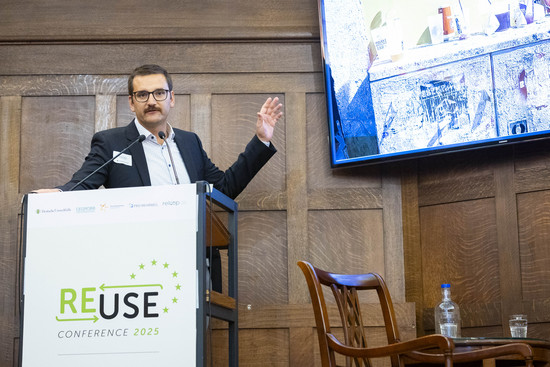
Hugo Sancho, Environmental Counsellor to the Permanent Representation of France to the EU, outlined how France is already beginning to put the PPWR into practice domestically and how the country is paving the way toward a circular future for packaging. Rasmus Nordqvist, Member of the European Parliament for The Greens/European Free Alliance, took a broader view, discussing both the potential and the shortcomings of the Regulation and stressed that by itself, the PPWR is still not sufficient to make reuse the new standard. Ioannis Antonopoulos from the European Commission then provided a comprehensive overview of how the implementation of the PPWR will be shaped through secondary legislation.

Together for Reuse – How Initiatives are already putting Policy into Practice
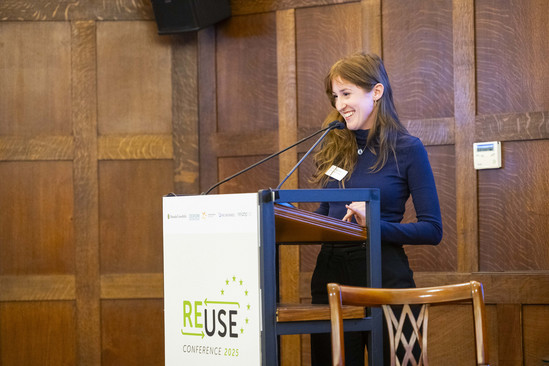
Despite continued efforts by the single-use lobby to weaken ambitions, it is vital to prioritize waste prevention in line with the waste hierarchy. Environmental legislation faces pressure under the pretext of simplification, threatening packaging policies. NGOs are under attack, and biased reports aim to favor disposable packaging. To counter this, Barbara Metz, Executive Director at DUH, called upon everybody to stand united and advocate for robust reuse policies. The speakers at the conference highlighted the ongoing collaborative efforts to develop innovative reuse solutions and showcased the many initiatives already putting policy into practice.
Mateus Carvalho from the Environmental Paper Network warned that the rise in paper-based packaging is not environmentally sustainable, citing the heavy social and environmental costs. Over three billion trees are cut annually for paper packaging, creating a widening demand-supply gap. He emphasized that reuse is the only genuinely sustainable alternative and cautioned that PPWR exemptions could undermine waste reduction goals, advocating for smart implementation that prioritizes reuse.
Tatiana Lujan from ClientEarth discussed the relationship between the PPWR and the Single-Use Plastics Directive, noting they should be interpreted harmoniously. She highlighted that EU countries can adopt additional measures and maintain existing national sustainability requirements as long as they don’t conflict with the PPWR. This flexibility allows Member States to enhance reuse initiatives and foster a more circular packaging system across Europe.
Diana Imaka from Depozita Punkts gave insight on the benefits of Latvia’s harmonized Beverage Deposit and Return System. A single, nationwide scheme managed by one accredited organization not only offers higher recycling rates but also increased efficiency and simplicity for all stakeholders – consumers, producers, retailers, and the environment. She stressed that while setting up mandatory deposit systems they need to be designed to share infrastructure with reuse or are reuse-ready for future implementation.
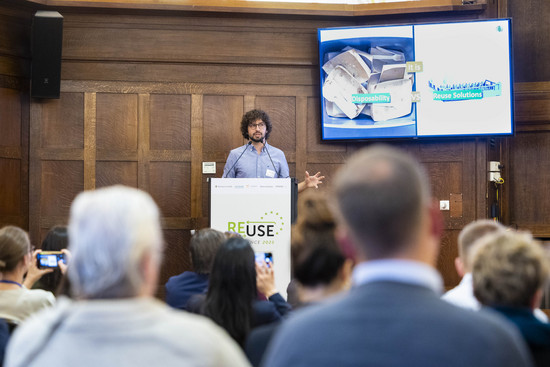
Sven Hennebach from TOMRA Reuse outlined Lisbon’s rollout of a city-wide reuse takeaway system, now operating 17 automatic return stations with over 300 users and 3 million circulations, demonstrating effective action against single-use waste. Andreas Bayer from Logistikverbund-Mehrweg shared Austria’s lessons from introducing mandatory beverage reuse in supermarkets, stressing early supplier engagement, pilot programs, incentives, clear signage, and staff training, supported by strong legal frameworks. Adding a supply-chain perspective, Lia Huybrechts from Searious Business highlighted the need to establish reusable transport systems ahead of the 2030 mandate, with initiatives like oceanBag and RePLHA reducing hard-to-recycle waste and boosting resilience and sustainability across Europe.
European REUSABLE Award for Innovations in Glass Production and a city-wide Reuse System
The conference highlighted numerous innovative reusable solutions, proving that single-use packaging can be replaced in almost all areas by climate-friendly alternatives. Across Europe, standardized reusable packaging options now exist not only for beverages but also for a wide range of other products. Beyond new packaging formats, there is also a wave of advanced systems and processes that make reuse increasingly climate-friendly and easier to implement.
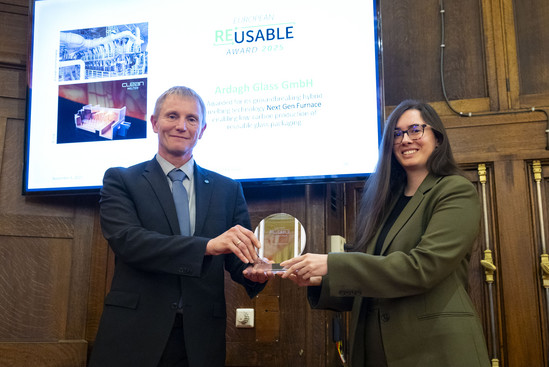
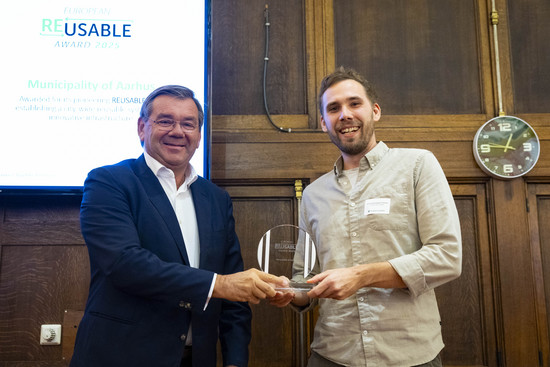
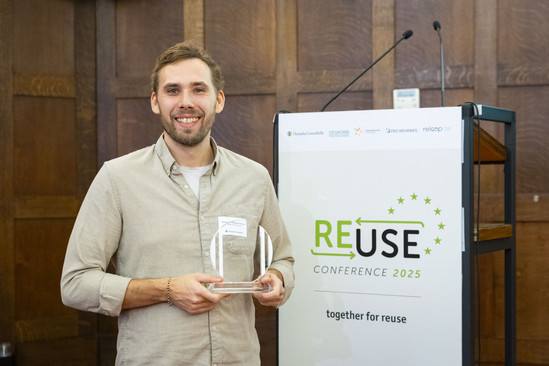
Ardagh Glass GmbH received the European REUSABLE Award for its groundbreaking hybrid melting technology, the Next Gen Furnace, which enables low-carbon production of reusable glass packaging. The Municipality of Aarhus was also awarded the European REUSABLE Award for its pioneering REUSABLE Pilot, which is establishing a city-wide reuse system supported by innovative infrastructure.
PPWR Implementation across Member States needs to be ambitious and timely
In the lively panel discussion, participants explored the challenges and opportunities of PPWR implementation across Member States. There was a clear consensus that the ongoing implementation of the PPWR represents a unique opportunity to create ambitious, well-designed reuse legislation. Panelists emphasized the need for secondary acts that are clear, ambitious, and on schedule, alongside sustained pressure on Member States for timely national implementation – measures that will give reuse businesses the time they need to prepare and adapt. The panel also discussed how to securely finance reuse systems in the short- and medium-term during scale up and well as how to make them economically sustainable in the long term.
At the next REUSE Conference in 2027, we will evaluate whether the PPWR has truly sparked the transition toward a sustainable packaging market and whether reuse is closer to becoming the new norm. We look forward to once again welcoming numerous participants from politics, civil society, business, and academia.



Contact

Annika Schall
Senior Expert Kreislaufwirtschaft
E-Mail: Mail schreiben